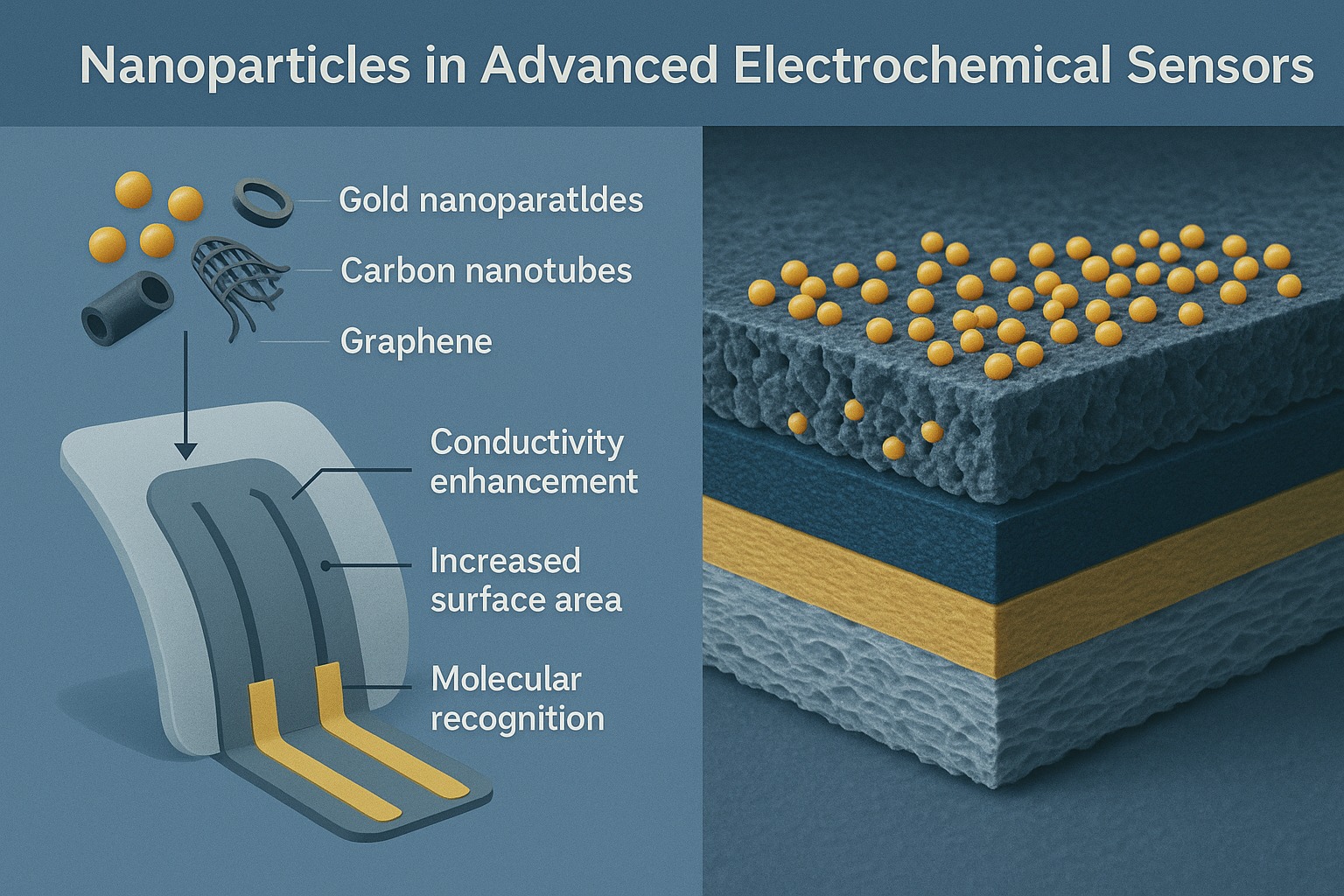
Evolution of Electrochemical Sensing Method
Electrochemical sensing has evolved from complex laboratory-based systems to compact, portable technologies that enable rapid and accurate chemical analysis. This blog explores the fundamentals of electrochemical sensing, the transition from conventional setups to screen-printed electrode–based portable systems, and how modern designs are shaping real-world applications.
What Is Electrochemical Sensing?
Electrochemical sensing is a method used to detect and measure chemical substances by converting chemical reactions into electrical signals. When a target substance interacts with a sensing surface, it produces a measurable electrical response such as a change in current or voltage. This technique is widely used because it is sensitive, accurate, and capable of detecting substances that cannot be observed visually.
What Is an Electrochemical Sensor?
An electrochemical sensor is a device that performs electrochemical sensing using electrodes and electronic measurement systems. It typically includes a working electrode where the sensing reaction occurs, a reference electrode that maintains a stable potential, and a counter electrode that completes the electrical circuit. The electrical signals generated during sensing are processed and converted into meaningful results.
Conventional Electrochemical Setup
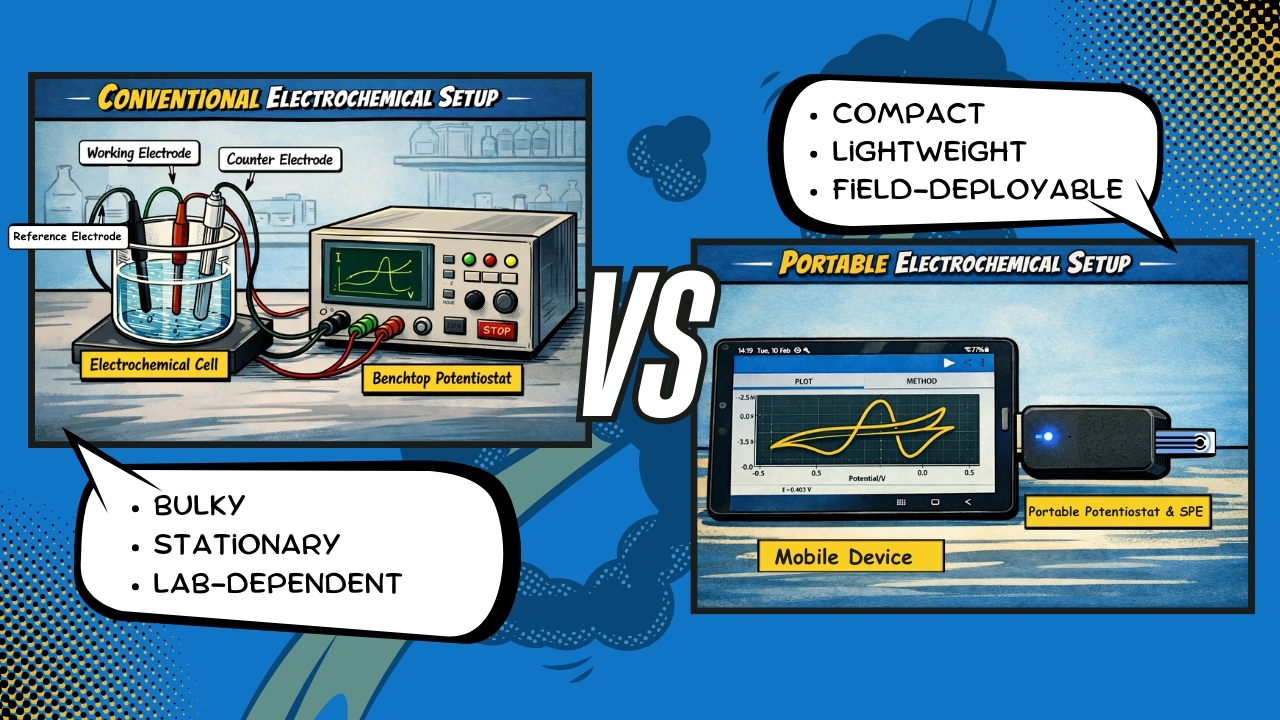
In a conventional electrochemical setup, separate electrodes are placed in an electrochemical cell containing the sample, and the system is controlled using a benchtop potentiostat. This setup provides high accuracy and flexibility, making it suitable for laboratory research. However, it is limited to controlled environments and is not designed for portable or on-site testing.
Portable Electrochemical Setup
A portable electrochemical setup uses screen-printed electrodes (SPEs), where all electrodes are integrated onto a single compact strip. This enables testing with small sample volumes and supports field and point-of-care applications.
At Alphaion, we design and manufacture screen-printed electrodes tailored to the specific needs of researchers, developers, and end users, delivering reliable and application-focused electrochemical sensing solutions.